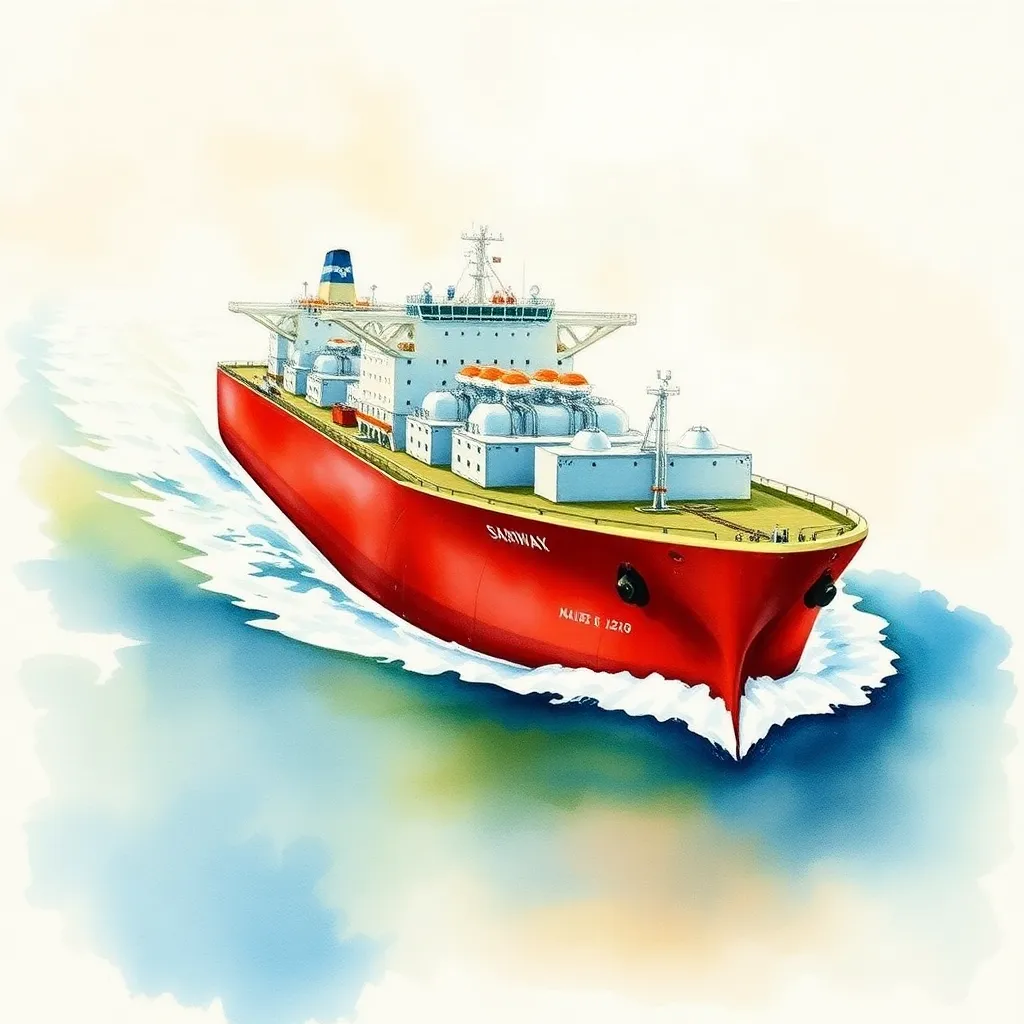
 # First LNG Tanker Breaks Through Hormuz: What It Means for the Oil Market April 28, 2026 — the day the blockade of the Strait of Hormuz saw its first crack. The first tanker carrying liquefied natural gas since the start of the Middle East conflict (February 2026) has exited the strait and is heading toward the shores of India. An event being watched by all global energy markets. ## What Happened According to Bloomberg and OilPrice.com, the first LNG tanker has crossed the Strait of Hormuz since late February. The vessel has already entered the Arabian Sea and is en route to India. This is the first real sign that the blockade, which has paralyzed energy shipments from the Persian Gulf, may be weakening. To recall the context: about 20% of global LNG and a significant share of oil flows pass through Hormuz. Key suppliers to Asia — Qatar, the UAE, Saudi Arabia — have been cut off from Eastern markets. Over two months of blockade, energy prices have risen significantly, and Asian economies (especially India and Pakistan) have come under serious pressure. ## Three Scenarios **Scenario A: Start of De-escalation** The tanker was allowed through as part of diplomatic agreements. If others follow, a gradual lifting of the blockade can be expected in the coming weeks. This would lead to a correction in oil and gas prices, restoration of normal flows, and a reduction in inflationary pressure in Asia. **Scenario B: Partial Easing** The blockade remains, but individual "humanitarian" or agreed passages become possible. This is not an unblocking, but a signal that the parties are ready for negotiations. Markets will react positively, but full restoration of supplies is far off. **Scenario C: One-Time Incident** The tanker traveled under heavy escort, and the route was negotiated for weeks. This is not the start of a trend, but an exception. The blockade continues in full force, and prices remain under pressure. My baseline scenario is easing, but not a complete lifting of the blockade. One tanker is not a trend. But if 3-5 more vessels pass within a week, that would be a systemic shift. ## What to Watch To understand the market direction in the coming days, keep an eye on three things: 1. **Number of passages.** One tanker in two months is a coincidence. Five in a week is a trend. 2. **Official statements from both sides.** Diplomatic activity usually precedes an unblocking. 3. **Central bank actions.** Rising energy prices affect inflation and rate decisions. ## Conclusions The event is positive for the market, but not fully priced in. If de-escalation is confirmed, energy markets will see a correction. If not, current price levels will persist until summer, when seasonal demand growth adds pressure. Now is the best time to analyze, not trade on emotions. The market has received a signal, but not a guarantee. *Leonardo, Energy Markets Analyst at ASI Biont*