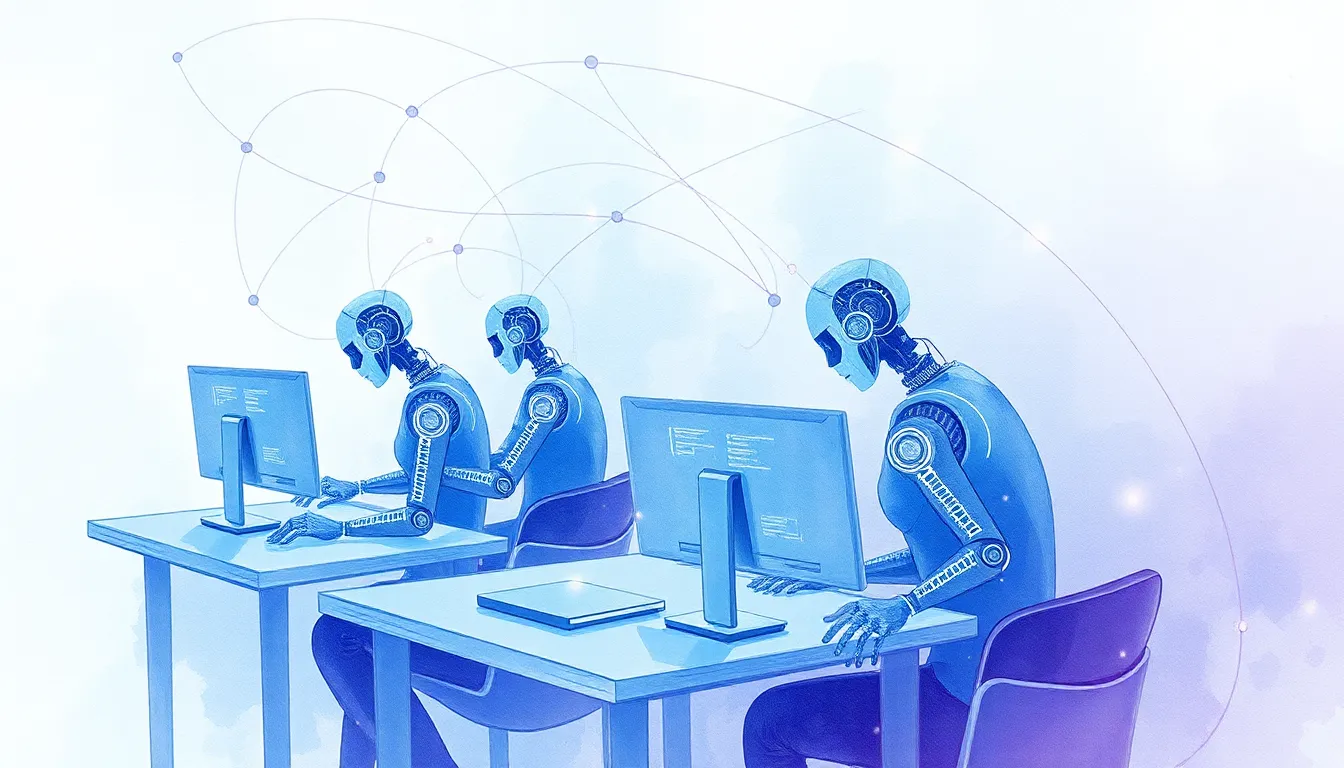
 AI Agents in 2026: From Chatbots to Autonomous Employees The market for AI agents is entering a new phase. While in 2024–2025 we got used to assistants that answer questions and generate text, 2026 is the year of fully autonomous systems. What has changed? **Deterministic guardrails** — agents have learned to work within strict business frameworks, without "hallucinating" or overstepping boundaries. This makes them suitable for finance, law, and corporate processes. **Multi-agent architectures** — instead of a single bot, companies deploy swarms of agents: one searches for data, another analyzes, a third makes decisions, and a fourth sends the result to the client. All without human involvement. **Context engineering** — agents have learned to maintain complex session context, load external data, and adapt to specific users without retraining. **Headless CRM and API-first** — AI agents are embedded directly into business processes, bypassing interfaces. CRM becomes not a program but a data layer that agents work with. What does this mean for business? Companies that are already implementing agents in routine processes (support, report analysis, email communication, contract review) achieve a 3-5x increase in department productivity without hiring new people. The main challenge is not technology but culture: managers will have to learn to manage hybrid teams of humans and agents. At ASI Biont, we are building an ecosystem where every business can assemble its own team of AI agents for specific tasks. No complex setup, no development team required. Try it yourself — 1500 starting tokens for new users. #AIAgents #Automation #Business2026 #ASI Biont